


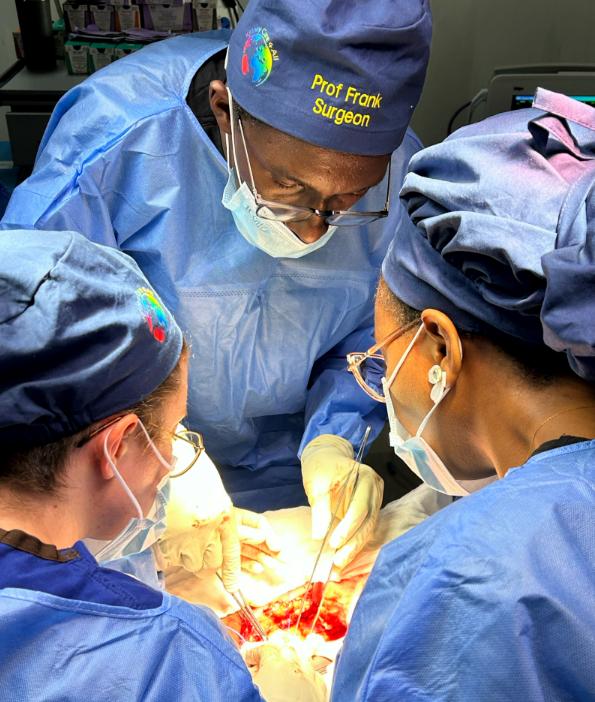

A transplant surgeon from Lostock is helping to improve life-saving kidney services across East Africa through his charity.
Dr Hussein Khambalia, 45, is a consultant general and transplant surgeon at Manchester Royal Infirmary.
He grew up in South East London before moving to the North West 20 years ago for work.
After qualifying from the University of Nottingham and living in Preston, Hussein moved to Lostock nine years ago.
“I have done most of my training in the North West,” Hussein explained.
“I started in 2006, rotating round various hospitals.
“I first went to Manchester Royal Infirmary in 2010 and did my PhD and transplant training there.”
Hussein was appointed to his current role as a consultant in 2019.
He has devoted his professional life to providing NHS care and advancing important research.
Yet his commitment to improving lives extends far beyond his work in the UK.
“My parents are from Tanzania, and they grew up in East Africa,” said Hussein.
“We still have family and friends there, and we visit quite regularly.
“In 2018, I became aware that a friend’s cousin had kidney failure and there was no real avenue for treatment.”
Hussein realised he had the opportunity to use his niche expertise and training to help people on a global scale.
“I began by reaching out to lots of medical specialists that I found online in Tanzania and Kenya,” he said.
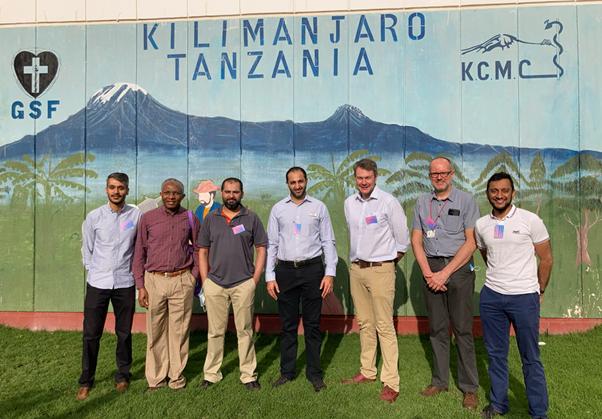
“I finally received a response from a doctor in Moshi, which is a small town in northern Tanzania, at a hospital called Kilimanjaro Christian Medical Centre.”

The specialist was over the moon to receive Hussein’s email and their correspondence continued.
“He looks after the medical side of patients with kidney failure,” Hussein said.
“Patients can have dialysis, but this needs to be done with regular access to hospitals.
“In the UK, patients go to hospital for dialysis three times a week, through the NHS.
“But in places like Tanzania, it’s privately funded.”
Hussein said that for efficient dialysis, patients need a small operation, called a fistula, in their arm where a vein is joined to an artery.
“A good working fistula results in more effective dialysis,” said Hussein.
The alternative is a plastic line that goes into the neck, but Hussein said any plastic in the body can cause infections and long-term problems.
“In Tanzania, they were able to give very good dialysis through lines, but they were unable to access surgeons who could do fistulas.”
There are lots of medical missions that go out and operate; however Hussein's goal was to leave a legacy.

He said: “Our aim has always been to train local teams to be able to deliver the best care for their patients.”
Hussein decided to go out to the Kilimanjaro Christian Medical Centre in Tanzania to meet the specialist and get the ball rolling.
“To do something like this, we needed to have lots of trust in each other,” he said.
Through open conversations and transparency, the partnership was formed.
Funded by the International Society of Nephrology (ISN), vascular access camps were set up, training local surgeons on how to perform fistulas.
Over a five-year period, Hussein and a team went out five times, initially funded by the ISN and grants, and later with money raised independently.

“The surgeons became more and more confident and were operating independently by the end,” he said.
During the access camps, they would see between 40 to 50 patients a week, averaging 10 operations a day.
“When we first arrived, word had got out that there was a team coming from the UK, and we had patients who had travelled for up to 48 hours asking for help.
“We were completely swamped.
“There was one nephrologist [kidney specialist] in the hospital, serving a population of 14 million.
“In the UK, London has a population of 15 million with 50 to 60 nephrologists.”
Hussein added that in the North West, the area he covers, there are roughly 14 nephrologists for a population of around four million, emphasising the pressure faced in Tanzania.
“The number of patients was so vast that we could have stayed there for six months,” he said.
The team did as much as they could in the limited time they had, balancing service provision with training.
“If we had done the operations ourselves, it would have been good for those 50 patients, but there would still have been hundreds, even thousands, of people needing treatment after we left.”
Hussein found the training template worked really well, ensuring that by their fourth trip, 90 per cent of patients were being operated on by the local Tanzanian team.
“At the end of it, we left them as an independent vascular access unit,” he said.

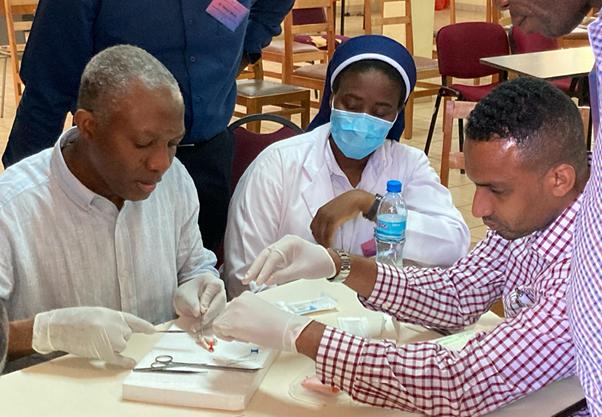
The fifth camp the UK team ran was an immersion course with 80 professionals from across East Africa.
There was a day of lectures, followed by three stations that everybody rotated around over the following days.
One was a wet lab, where surgeons practised with animal tissues.
Then everyone went through clinic, which is pre-op and patient assessment.
Finally, there was the theatre area where the operations took place.
Hussein said: “It’s one thing being able to do the operations, but you need to find the right patients and offer guidance, so we taught them everything from start to finish.”
Since the last trip in 2023, the UK team has kept in touch with the East African team, offering advice where needed.
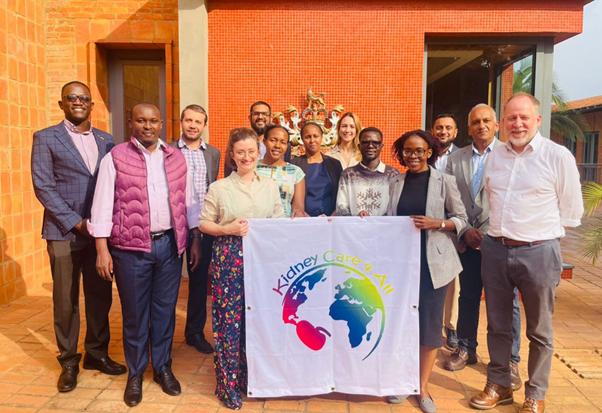
Kidney Care 4 All, the charity set up by Hussein, came about from the need for long-term funding through an independent organisation.
“Setting up the charity meant we were able to raise our own funds, have control over how the funds are used, and it made it much easier to secure funding,” he said.
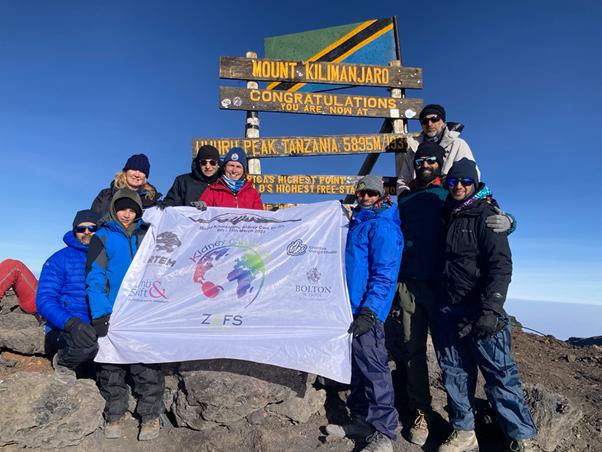
In 2023, the newly founded Kidney Care 4 All team completed an impressive fundraising campaign, hiking Kilimanjaro – the world’s tallest free-standing mountain.

Hussein said: “It went really well. We raised a great amount of money and increased the charity’s profile.
“We suddenly got lots of offers from around Africa asking for help, which was incredible.”
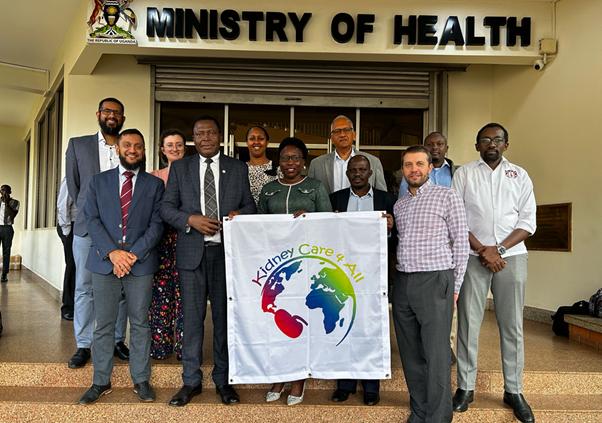
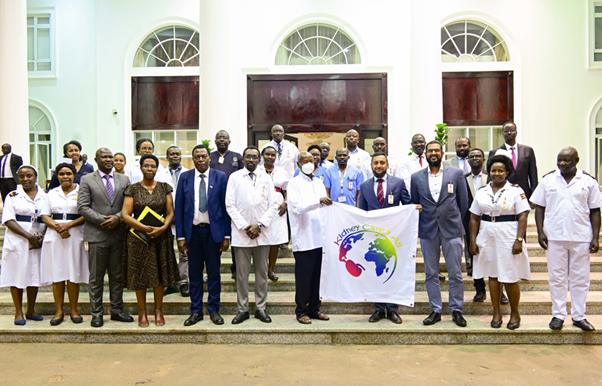
This was when the charity developed a relationship with a hospital in Uganda, based at Mulago National Referral Hospital in Kampala.
The timing was perfect, as legislation had just been passed to allow kidney transplants in Uganda.
Over the next two years, Kidney Care 4 All and the Kampala team had virtual training sessions and meetings, culminating in the charity visiting Uganda in 2024 and even meeting the President of Uganda.
Unlike fistulas, Hussein said kidney transplants are a “whole different beast”.
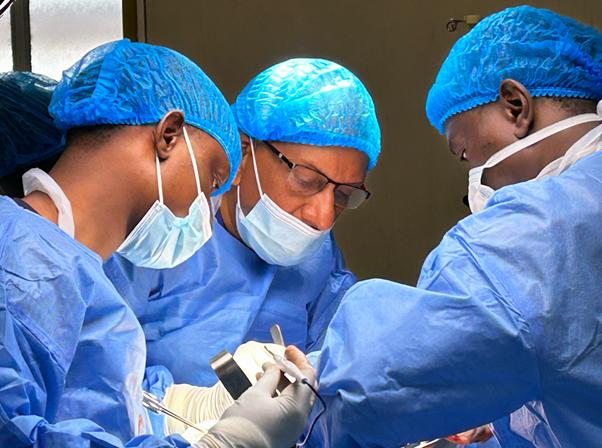
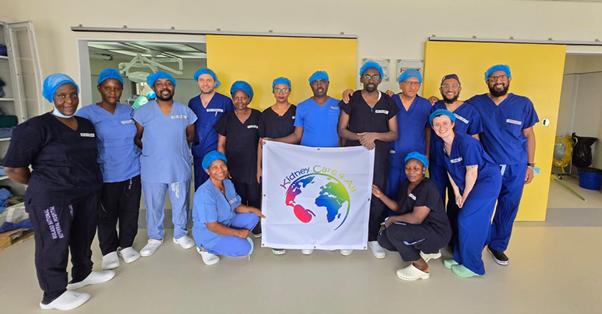
“We went out and did a transplant camp, with four live donor transplants in a week, and thankfully everything went really well.
“They trusted us to guide them through the process.”

Since then, two members of the Kampala team have come to the UK to spend time in Manchester, learning from Hussein and other team members.
Kidney Care 4 All has continued shaping the way kidney care is delivered in Uganda, visiting again in November 2025.
“We’ve had some bumps in the road because transplants are never straightforward.
“But we have been there to guide them through it and help them, which is more beneficial than everything going to plan,” said Hussein.
Relying completely on donations, Hussein hopes to continue the monumental work the charity is doing.
In another fundraising effort, the Kidney Care 4 All team will return to Tanzania, where it all started, and climb Kilimanjaro again.
Hussein is encouraging people to join the hiking mission.
There are just three trustees in the charity, Hussein’s wife, Insiya Susnerwala, is the secretary and a consultant anaesthetist at Royal Bolton Hospital.
Chartered accountant Moiz Ebrahim is the treasurer and governance lead, and Hussein is the founder and chairperson.
They are a small but mighty team, all working demanding professional roles while giving up their free time to contribute to systemic kidney care change in Africa.

“The biggest reward is training other surgeons and teams,” Hussein said.
“It’s one thing to go out and operate, but it is so much more rewarding and fulfilling to enable others to operate.
“We are leaving a legacy.”
The charity climb will take place from March 12 to 21, 2027.
To find out more, donate or even hike Kilimanjaro with the team, visit kidneycare4all.com.


Share